Friday, April 11, 2014

SUBSCRIBE to PORTLAND ASHTANGA YOGA!

I have taught daily Mysore in Portland since fall 2007; I launched Portland Ashtanga Yoga several years back (at the same location).

If you're interested in continuing our (mild) online conversation, you can follow me at the blog I keep at the Portland Ashtanga Yoga site.

As usual, I strive to incorporate words like cod-piece and fuckery in thoughts about Ashtanga. You will doubtless find the conversation as scintillating as ever.

Monday, April 8, 2013

PERSPECTIVES ON HANDSTANDS IN ASHTANGA

Some great perspectives on handstands within the Ashtanga tradition:

"5 Rights Don't Make a Wrong: What Noted Ashtanga Teachers Have to Say About Handstands"

Also, what is the deal with Elephant Journal? I occasionally am redirected to interesting articles posted there, such as Carlos Pomeda's from early 2012, or even Kino Macgregor's, but then when I visit the site, there appears to be nothing but lists and T&A&Y (tits, ass and yoga)? What am I missing?

Wednesday, March 6, 2013

"ANY INSTRUCTION WAS AN ORDER": IYENGAR ON KRISHNAMACHARYA

As per conversation at the Confluence about Krishnamacharya, Pattabhi Jois, and B.K.S. Iyengar, I re-read an older interview Iyengar gave regarding his teacher.

Iyengar was interviewed by Rajvi H. Mehta, and the interview was posted here.

"I was 15 when I first came in contact with my guru, Sri T Krishnamacharya. My stay with him was only for two years."

"He only used to make us perform jumpings. All our earlier performances were only with these sequences. Later, when I was teaching in Pune, quite a few wrestlers became interested in the subject. Pune was then famous for its wrestlers. The wrestlers were already performing thousands of Surya Namaskars a day, so it was a place where exercises with 'conative' action was very strong. They started questioning how their Surya Namaskars were different from the yogic ones. My internal observation while practising gave me the philosophic insight."

"No, pranayama was learned by myself. When he [Krishnamacharya] came to Pune, he said that he would explain 'Ujjayi Pranayama.' Beyond that he never showed me anything. But I had seen him practising pranayama and a little of that background remained with me."

"My Guruji came to Pune in 1938, as he was invited for a lecture demonstration ... After 1940, the only other time he visited me was in 1960-61. I had married by that time and had a family. He stayed with me for a month and was a tremendously changed person."

1. Iyengar never received Yoga philosophy, postural, breathing or meditation instruction directly or specifically from Krishnamacharya.
2. Iyengar was only directly exposed to Yoga practice with Krishnamacharya for 2 years, during his teenage years, age 15-17 --- say sophomore and junior year of high school.
3. Iyengar derived the Yogic aspect of Surya Namaskar through his own practice.
4. Iyengar developed and practiced his own system of pranayama.
5. After this initial 2-year period, Krishnamacharya only saw Iyengar three more times, when Iyengar was 18, when Iyengar was 20, and then finally when Iyengar was 42.
6. Krishnamacharya was apparently a colossal dick.
7. On consideration of this, perhaps Iyengar's genius has been understated, and perhaps Krishnamacharya's contributions have been overstated?
8. What level of innovation and contribution must Pattabhi Jois have made?

On one hand, glossed by the big picture of history, to participate in parampara is to stand in the stream of a tradition in which the teacher (guru) is the symbolic representation of these teachings.

On the other hand, to look closer is to reveal the lumps, the asymmetries, the rough and blurry edges of any tradition: Iyengar's experience and understanding of Yoga came about in spite of his teacher's efforts.

Thursday, February 28, 2013

2013 CONFLUENCE

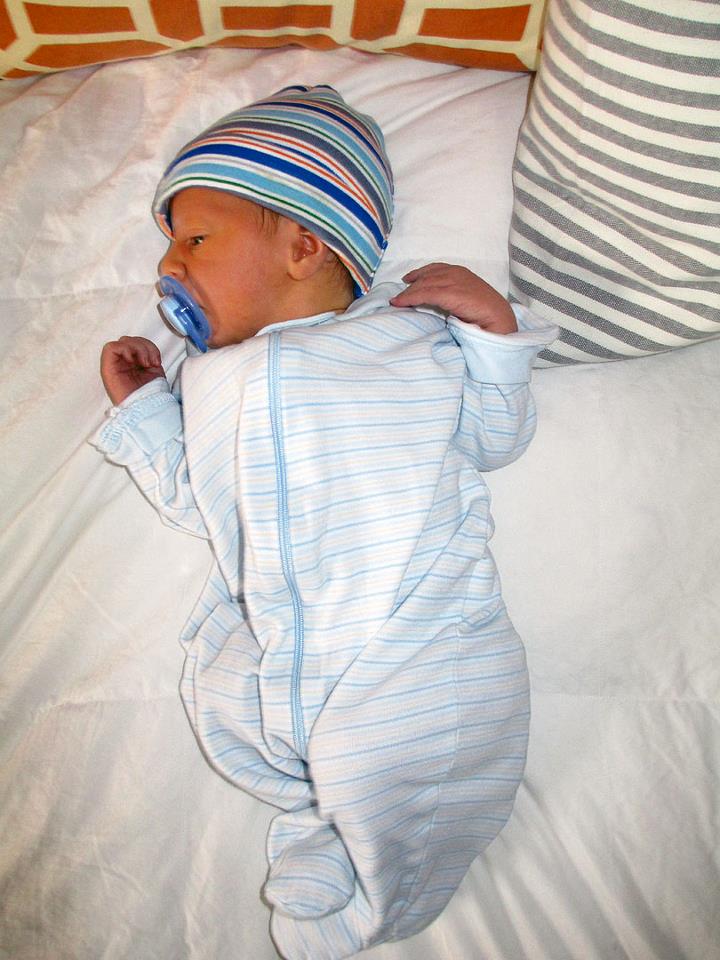
As this is published, we are en route to San Diego for the 2013 Confluence, and looking forward to meeting up with old friends, showing the baby to Uncle Timmy, taking stroller walks on Mission Bay, and of course practicing Mysore-style Ashtanga Yoga. Hope to see you there.

Wednesday, February 27, 2013

NEW BEGINNINGS

My long-time friend Chad Herst has been writing some terrific posts about Ashtanga lately.

His latest post is a shocker.

I am both sad and happy at the same time: sad because he is a great Mysore-style teacher; happy because clearly he has made the right choice.

Monday, February 25, 2013

JOSEPH CORNELL'S ASHTANGA YOGA


Please replace the word "box" with "primary series":

The box, to Cornell, is a gesture—it draws a boundary around the things it contains, and forces them into a defined relationship, not merely with one another, but with everything outside the box. The box sets out the scale of a ratio; it mediates the halves of a metaphor. It makes explicit, in plain, handcrafted wood and glass, the yearning of a model-maker to analogize the world, and at the same time it frankly emphasizes the limitations, the confines, of his or her ability to do so.

"Wes Anderson's Worlds" by Michael Chabon 

Tuesday, February 19, 2013

CHARLATAN ADDENDUM

I wrote a post called "The Alignment Problem" a few days (weeks?) ago.

(Excuse me I'm in a newborn baby time-tunnel here.)

I should have been more explicit that I don't consider all, or even that many, Ashtanga teachers "charlatans," Authorized, Certified, "jungle," or otherwise.

(The "jungle" Ashtanga teacher is the one out in the wilderness, doing her thing, without "official" connection to the tradition from Mysore.)

Taleb used the word however and it certainly is a provocative way to regard experts.

It is always interesting to consider the two ends of the Ashtanga spectrum, the emphasis on technique and alignment, and the emphasis on dynamism and movement.

Thankfully dig deeply in one and you find the other (hopefully), and vice versa.

WHAT I HAVE BEEN DOING LATELY

January 31, 2013:


Friday, February 8, 2013

THE ALIGNMENT PROBLEM IN YOGA


"There is no improper alignment. There is only improper preparation."

Ido Portal is a charismatic and challenging guy; he's not invested particularly in any one school or system and therefore has no problem calling bullshit where he sees it.

An over-emphasis on alignment in Yoga is indicative of an Expert Problem, what I call the Alignment Expert Problem. From Taleb:

"At the core of the expert problem is that people are suckers for charlatans who provide positive advice (what to do), instead of negative advice (what not to do), (tell them how to get rich, become thin in 42 days, be transformed into a better lover in ten steps, reach happiness, make new influential friends), particularly when the charlatan is invested with some institutional authority & the typical garb of the expert (say, tenured professorship) [or in Ashtanga for example the Authorized or Certified Teacher] ...

Yet I keep seeing from the history of religions that survival and stability of belief systems correlates with the amount of negative advice and interdicts — the ten commandments are almost all negative; the same with Islam. Do we need religions for the stickiness of the interdicts?"

Four of Patanjali's five Yamas are "negative advice and interdicts," and the positive admonition, satya, could be interpreted negatively, as "not lying."

(Ahimsa: non-violence. Satya: truth in word and thought. Asteya: non-covetousness, to the extent that one should not even desire something that is his own. Brahmacharya: abstinence, particularly in the case of sexual activity. Aparigraha: non-possessiveness.)

(I am thinking about the Niyamas as heuristics, best followed as "rules of thumb" developed through trial-and-error in which a relationship to five Niyamas is developed by keeping the best results and discarding the negative; i.e. Yoga As Laboratory.

Problem with Niyamas as heuristics is unearthing cultural, social, personal biases ((usually expressed as Narrative Fallacy, i.e. arranging personal narrative around facts and deriving causality.))

(Also interesting to see kaivalya or svarupa shunya as the ultimate "negative interdicts.")

It's easier to be told what to do, than what not to do in broad strokes.

As evinced through numerous conferences with Guruji: "What do I eat? How much do I sleep? When can I have sex? What is the angle of the legs in triangle?"

Later expressed as, "In Mysore they do X, Y and Z." or "Guruji [now Sharath] told me to do X, Y and Z."

The art of Yoga practice is the art of learning not to be a sucker for charlatans.

I had some rough thoughts on how to identify a non-charlatan Yoga teacher:

1. Reluctance to provide positive advice (as opposed to negative)
"Don't breath so raspy" is better than minute and tedious technical directives.

2. Situational doctrinal flexibility 
Form and technique as expressions of lineage (asana sequences) are important in the large sense, and so too is the ability to bend, break or ignore that "tradition" with the person directly in front of you as their needs dictate.

3. Can transmit heart of tradition rather than its facile expression
Understands transmission of forms (asana sequences) and techniques (breathing, gazing, etc) as means of allowing Yoga to arise, and can answer questions and provide directions from this perspective.

Famous questions for example, "In twisting poses should the binder grab the wrapper, or the other way around?"

Barry reminded me Guruji would say, "You are asking the wrong question."

The non-charlatan might say, "How is your breathing?" etc.

The Alignment Expert Problem in Ashtanga is compounded by the fact that anatomical knowledge and expertise are wed to exotic and foreign Sanskrit jargon, dense terminology that can function to funnel expertise in one direction, as well as keep out those who don't understand.

Still one of the strongest components to practicing with Guruji and Sharath is/was the mostly disinterest in alignment cues --- Ashtanga is seemingly alone in this, as many other systems owe large debts to Iyengar, a system that perhaps best epitomizes the Alignment Expert Problem.

Watching Sharath practice, or the Indian practitioners during the later class, is/was revelatory as the typical cuing for body alignment is almost non-existant. The focus is on the breathing.


Tuesday, January 22, 2013

STRATEGIES & TACTICS

My ranting and raving regarding the unique snowflake and deadweight children excuses aside, waking up early to do anything let alone practice can be very difficult.

Here are some strategies and tactics that might help.

Strategies
8 Hours
Aim for 8 hours. Your specific amount will vary. But don't kid yourself that "you need less." You don't. Shoot for 9 hours every day of the week, see how you feel. (Probably great.) Quit kidding yourself that you can't do it. You're just fucking around on the Internet.

Sleep Cave
Create a sleep cave: cool and pitch black. Use a black-out curtain.

EMP Pulse
Almost all electronic screens use light towards the blue end of the spectrum. This will prevent quality sleep. Shut down your shit about an hour before you plan to hit the hay.

Create Ritual
Practice the "when," "where," and "how" it's time to wind down. Consistency is queen.

Tactics
Strategies are well and good. Here are two specific tactics you can actually put in practice.

Alarm Distance
Set your alarm at a louder volume. Move your alarm --- it's probably your iPhone --- well away from your bed.

Clothes Horse
This is probably one of the single best tactics I have ever learned. 

It's based on the idea that humans are all cognitive misers, and have limited amounts willpower. 

The night before, pick out your yoga clothes and work clothes. Put them in a pile. 

When you wake up, your yoga clothes and work clothes are already selected for you. 

Take a shower, put them on, and get in your car. Coffee optional.


Monday, January 21, 2013

THE "YOUR KIDS ARE NOT ANCHORS" SPEECH

I know you love your child and/or children.

They're terrific, exciting, and interesting beings, who demand a lot of you.

However they are not anchors, mill-stones, or albatrosses around your neck.

They are not burdens, inflictions, or obstacles.

I have an 8-year-old daughter and (in less than 2 weeks) a newborn boy.

I could also bore you with the number of women who travel long distance, leaving their one or two children at home, in order to practice morning Mysore.

Every day.

These women, and my wife and I, and our countless friends, manage to practice daily because this  is important enough to us to get it done.

However, I know first-hand that it's difficult --- to juggle schedules, yours and your partners (if you have one), to get up that early, to perhaps even sacrifice a 2-hour practice for a shorter one ---

It takes effort and determination.

This effort and determination can only rest on passion for this style of practice.

If you don't have the spark, you don't have the spark.

So quit short-changing your kids.

We're both adults here. We can both recognize a bullshit excuse when we hear one.

Just say, "Meh --- I'm just not that into it."

THIS IS PERFECTLY FINE.

Friday, January 18, 2013

THE SNOWFLAKE SPEECH, AGAIN

Listen, I know your mother told you that you were a delicate and unique snowflake.

But you're not.

Let me back up.

I understand that waking up at 5 a.m. (or earlier) to practice Yoga seems outlandish, extreme, or perhaps just uncomfortable.

But you are not "not a morning person."

We are tied to the earth's cycle of day/night by millions of years of evolution, also known as our  circadian rhythm.

Your DNA still thinks it's 2 billion years ago, and therefore you --- yes you --- thrive best when you see the sun rise (this suppresses melatonin) and set (this boosts it).

However, what I do understand is that you have developed over many years the habit of staying up late for TV, movies, email, Facebook, or conversation.

You also consume caffeine and sugar and other stimulants.

I also understand that waking up early is uncomfortable, and can be difficult and challenging.

You stay up late because you've never had the reason or impetus to develop the discipline to get up early. You've trained yourself to not wake up early.

Point being, we're both adults here, so please let's skip the "I'm not a morning person" bullshit. We can both recognize it as the excuse it is.

Look, I get it. I did this practice at 7 a.m. daily for more than 10 years (a habit I've now given up due to teaching; please note that I also choose not to practice at 4 a.m.)

Waking up that early means going to be a bit earlier, drinking a bit less booze, perhaps watching the night-time food intake a little bit, shutting down the computer at a certain point, saying goodbye to friends --- it means, in effect, getting your shit in order.

This is tough, and like I said, I get it. 

It may just be that Ashtanga is not enough to spark the flame in you to look at and perhaps change these habits.

This is absolutely fine! You're just not that into it! There is nothing wrong with this.

So in the future, please just say, "I'm just not interested in morning Ashtanga enough to change my habits."

Or "I'm just not that into it."

Stay tuned for the next installment, The Kid Speech.

Friday, January 11, 2013

JANUARY 2013 READING

Here are a couple books I've read in the last year that I've liked.

This is mostly yoga-related, and excludes my other reading, which includes, non-fiction, comic books, graphic novels, and genre fiction (which typically includes literary fiction, science fiction, mysteries, fantasy, and pulp).

Awake in the World
Michael Stone
I really liked this one. Speaks directly to the experience of the Hatha Yogi without being obnoxiously Buddhist.

Yoga and the Luminous
Christopher Chapple
Yo Chapple dawg, you picked seriously the worst cover for your book in the world. My hyperbole aside, this is one of my favorite books on the Yoga Sutras. You can read it straight through, or essay by essay. It includes background on the historical and social context of the Sutras, as well as discusses thematic developments. It also includes a line-by-line translation.

The Yoga Body
Mark Singleton
A great exploration of the social and historical development of posture-related Yoga practice.

Yoga in Practice (ed.); Tantra in Practice (ed.); Sinister Yogis; The Alchemical Body
I read a lot of David Gordon White books last year. They're dense but rewarding. Sinister Yogis,
Samuel's The Origins of Yoga and Tantra, and Singleton's book present a compelling story of the development of contemporary Western Yoga practices.

A History of Modern Yoga: Patañjali and Western Esotericism
Elizabeth De Michelis
Maybe too academic for the casual reader, still a very compelling look at specifically how the story of Patanjali and the Sutras have been and continue to be retold.

Yoga Sutras of Patanjali
Chip Hartranfft
Another of the most compelling and readable versions of the Sutras; from a more Buddhist perspective.

Bhagavad Gita
J.A.B. van Buitenen
Van Buitenen's version is one of my favorites because he renders the text in prose form, which really let me trace the thematic and tonal shifts and developments, which for me was a bit harder to absorb in standard verse form.


Thursday, January 10, 2013

THE YOGA POSTER


En route to coffee with Bill this morning, we walked past this huge poster in the window of Powell's Books (the biggest and best bookstore in the U.S. ... perhaps the world?).

It's pretty dope. Also, the fine print reads "peer-reviewed."

Though I wonder if they have to strike off Anusara? (Okay, that was a cheap shot.)

I found more info at theyogaposter.com.


Monday, January 7, 2013

ASHTANGA APHORISMS

I lingered at LAX for many hours on Christmas Eve. Inspired by Nassim Nicholas Taleb's The Bed of Procrustes, I wrote a bunch of Ashtanga-related aphorisms.

According to Taleb, "a good maxim should 1) surprise you, 2) be true, and 3) be symmetric (one assertion, one negation) or rhythmic."

Strength: first series builds it, second expresses it, third makes it redundant.

Practicing a certain way "because it's how my teacher does it" is the same as eating the menu.

Be wary of the teacher who hits on his students. Also be wary of the teacher who does not.

To become overly fascinated with the asana series is to become obsessed with the pill capsule or the syringe, or better yet, the ice-cream scoop or the chocolate wrapper.

If you want to turn someone on to Ashtanga Yoga, show her first series. If you want to turn her off, second. (After Taleb.)

A Mysore ashtanga teacher should prize consistency, humor, and flatulence. 

When looking for a teacher, avoid the bureaucrat, the technician, and the acolyte. Better the poet, the artist, the dancer. (After Brooks).

Nowhere does Patanjali mention embracing poverty, yet Ashtanga teachers act as if it's the ninth limb.

Talking about "your practice" is the only sin worse than not practicing.

Symptoms of a Guru Problem: when the Guru is the only person you're more afraid of contradicting than yourself.

The right question to ask the Guru is the one that makes you the most afraid.

If you fear conversation with your Teacher, he is not your Teacher.

Patanjali suggests to avoid future suffering; he was talking about lunch with Ashtangis — back pain, asana talk, Mysore gossip.

Avoid the yogini who tells you she is a yogini.

A Mysore teacher can be a friend or a teacher. Choose both, or neither, never just one.


Friday, December 28, 2012

HANDSTANDS & STIFF SHOULDERS

Left: Iyengar and the antique. Right: Yuval and the modern.
First, about the photo above. I emailed my friend Yuval Ayalon for permission to use the montage /assemblage he created. Yuval was a National-level competitive gymnast, and now performs as a generalist in the Le Reve Circus at Las Vegas' Wynn Casino.

Yuval responded, "Oh, you mean the duet photo?" 

It was a delightful response, and typical of Yuval. To him, to place the photos side by side both displays and honors different approaches to handstand practice.

Handstands do not make your shoulders stiff.

In fact, an active "modern" handstand both requires and builds active shoulder flexibility. The anterior and lateral delts as well as the trapezius (as well as pec minors and musculature around lat-tri insertion) must be flexible enough to achieve 180 degrees of flexion with no spinal extension.

I first heard the arch-y/banana handstand called "antique" by  equilibre master Lu Yi of the San Francisco Circus School. A student inquired about a curve-y, Yoga-style handstand.

"Yes yes, very pretty!" he said. "Like antique!"

What do I mean when I say "flexible"?

The concept of "flexibility" never exists separately from context, which is what I understand Pattabhi Jois to have meant when he used to say, "Body not stiff --- mind stiff!"

The sense of "flexible," as well as the "I" that owns the idea of "stiff," are only always relational and contextual.

The context for "flexible" in this case is movement --- so by "flexible enough," I mean "able to perform the requested range of motion."

What is the specific myth regarding handstands and stiff shoulders?

I believe that generally people refer specifically to difficulty with backbending.

So the criticism of handstands is not that they make your shoulders stiff (this lacks context), but rather they make your shoulders too stiff for backbends of a certain quality.

Andrey Moraru.
Based on my observations, typically gentlemen who have the upper body strength to more easily hold an "antique" handstand (see Iyengar in the photo) have developed that upper body strength and mass doing push-ups, handstand push-ups, dips, pull-ups, rope climbs, bench press, etc, etc.

So it's not so much that handstands make your shoulders stiff for backbends.

In fact, I suspect practicing a "modern" handstand will help your urdvha dhanurasana by improving active shoulder flexion while subtracting lumbar hyperextension.

I think it's more the case that men who could do handstands easily had stiff shoulders. What they lacked in shoulder flexibility they made up for with upper-body strength.

Association or even correlation are not causation.

Also, here are some movements that make shoulders "stiff," that is, will shorten range of motion of shoulder flexion by shortening the pec minors and the musculature around the lat-tri insertion: high-volume push-ups, pull-ups, rope climbs, muscle-ups ... bent-arm jump-backs and bent-arm jump-throughs ... static holds in chaturanga dandasana.

(Mostly repetitive, load-bearing, and shortened range-of-motion pulling and pressing exercises.)

Pavel is strong enough to do a straddle maltese...
These last movements --- bent-arm jump-backs and jump-throughs, and sustained chaturangas --- are a huge part of Primary Series, and of guided Primary Series classes.

What I'm suggesting is that perhaps Primary Series itself contributes to reduces shoulder flexion and therefore can reduce or limit facility in urdvha dhanurasana.

Primary Series is not designed for more than gentle back-bending (all the upward-facing dogs). For changes in backbending, as expressed by urdvha dhanurasana or kapotasana, Primary Series is much less than ideal preparation. It's better than nothing, yet let's not confuse a C-minus grade (barely passing) with an A. The Primary Series is not designed to meaningfully improve the spine and the typical limiting points, shoulders and hip flexors.

You have to ask, is Primary Series better at improving expression in those poses than, say, playing Nintendo Wii Golf, or Dance Dance Revolution, or taking a Pilates class?

... yet clearly shoulder (spinal) flexibility is not an issue.
To work within a tradition, however, means as Ashtangis we choose to follow and observe rules and limitations. We choose to focus on one thing, steadily, for a long time. By choosing a specific drishti, we choose to focus on certain practices at the expense of others.

We draw a fence around practices, techniques, and methodologies. Everything inside is Ashtanga; the practices beyond this fence are Not Ashtanga.

It's these boundaries that enrich and give meaning to our practice, because we agree to focus on this sequence, not that one, this posture, not that one.

Other practices, techniques, jargon, and sequences are not bad, or less --- they are just Not Ashtanga.

When I zoom in and focus on the borders between Ashtanga and Not Ashtanga, the fence tends to get a lot more fluid. But then clearly I am not a fundamentalist.

Personally, I practice the hell out of handstands. It is deeply rewarding for me.

However, at this time I practice them at a separate time and place from when I practice Ashtanga.

My back-bending has definitely gotten a lot less fluid and grace-filled (such as it ever was) over the last 6 months not from handstands per se but because I am practicing a lot more pressing and pulling. I'm also not practicing that many backbends because, well, for a long time my foot hurt like a motherbitch.

For now, I have cherry-picked some examples of tremendous handstand skill and strength coupled with ridiculous shoulder and spinal flexibility, just to show they are not mutually exclusive.

(Note: cherry-picked.)

Wednesday, December 26, 2012

MORE ON THE ASHTANGA DUCK TEST

What is the duck test?

To paraphrase Dr. Douglas Brooks, until more recent times, Ashtanga Yoga has passed the duck test of being religious --- "scriptures, concepts like revelation and ultimacy, moral imperatives," an [expert] who looks like clergy or a shamanist or an expert of a kind, "mysticism, pilgrimage [to Mysore], duck, bill, feathers, waddles, it’s a duck."

I'm not saying Ashtanga Yoga is only or merely religious, but on first glance to, say, ardent Christians --- I can see why they're aggrieved it's being taught in public schools. 

I believe they're right in their claims, too, despite my feeling that students would benefit greatly from the practice.

I would feel as uncomfortable with non-denominational prayer, too.

Friday, December 21, 2012

YOGA MUSIC

I weary of Yoga boutique music (or boutique Yoga) sometimes: Jai Uttal, Krishna Das, Deva Premal, Shantala; or on the electronic tip there's Cheb i Sabbah and Tabla Beat Science.

Earnest and heartfelt, to be sure, but I dunno. Sometimes that sweet spot is only hit by music so heavy my skull melts out my fucking ears.

Michael Stone, in one of the Centre of Gravity podcasts, mentioned that the experience of Yoga is universal, yet is only ever communicated through language, culture, society.

(I can't remember which one! I guess you'll have to listen to them all. I can recommend starting with the talks on Book 3 of the Yoga Sutras ... "The Superpowers.")

This subculture expresses Yoga through the kirtan of hypnotic cosmic doom metal.


At age 16 the band Sleep melted off my face; Om contains two guys from that band. Also of note: Shrinebuilder.

Thursday, December 20, 2012

ASHTANGA IN PUBLIC SCHOOL

Turns out some parents are complaining about Yoga classes held in a public school.

The New York Times wrote about it recently.

Ashtanga Yoga passes the duck test for religion with flying colors (if it walks like a duck, talks like a duck, etc, etc).

A practice designed to allow us to "see God everywhere" would seem to violate our ideals of separation of church and state.

Even if the woman quoted in the Times piece comes across as ridiculous!

Tuesday, December 18, 2012

VIA NEGATIVA & THE YAMAS

Further thoughts on Taleb's Antifragility: Things That Gain From Disorder:

Via Negativa: the removal of exposure to things that cause harm is more beneficial than adding preventative measures, safeguards, or additional supplementation.

In fact, often excessive preventative measures cause more harm, e.g. iatrogenics, when excessive medical intervention causes more harm than the original illness (i.e. going to hospital for illness and catching an infection in hospital; or over-prescription of medicines.)

This idea of Via Negativa runs through several of Patanjali's Yamas.

I find the Yamas that don't explicitly incorporate Via Negativa greatly benefit from this perspective.

Patanjali suggests to Do No Harm (Ahimsa), not Help Others.

Satya: Truthfulness; a Via Negativa approach would be Absence of Falsehood.

Asteya: Non-stealing, as opposed to a directive toward Giving.

Brahmacharya: Absence of sex, or abstinence, or celibacy.

Aparigraha: Absence of grasping, as opposed to Letting Go.

(Regarding Brahmacharya: You have to do some linguistic contortionism to arrive at any translation other than celibacy. Celibacy does not appear to be a good idea for most people (not all), and appears to reflect the Jain influence on Patanjali ((as all the Yamas are taken wholeheartedly from earlier Jain texts)).

However Brahmacharya is an important Yama as it brings front and center the complications inherent in most (not all) sexual relations.)

The takeaway for me is that many of the Yamas emphasize that it's more important to not do wrong than it is to do right.